The unrecognised value of discarded electronic devices
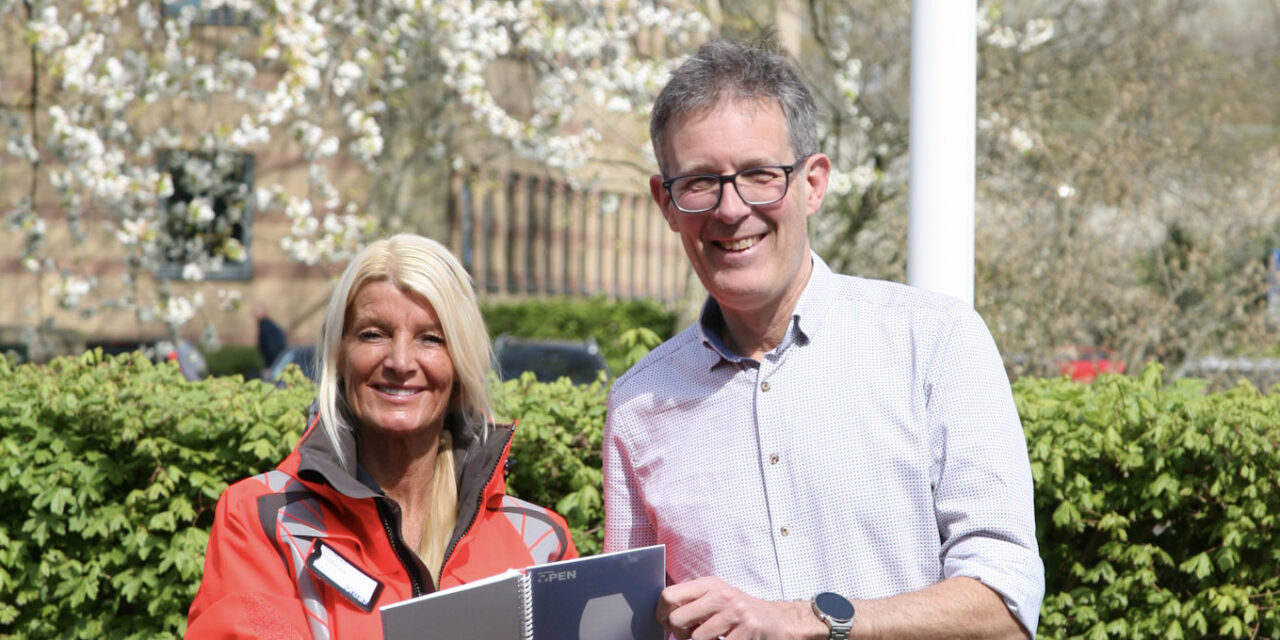
Purchasers play an important role in the transition towards a circular economy. This also applies to the management of electronic waste. How can we ensure that discarded devices are not lost, but are given new value? We spoke to Esther Musch and René Eijsbouts from the OPEN Foundation about the opportunities and challenges involved in the collection and recycling of electronic devices.
Can you tell us what the OPEN Foundation does?
‘The OPEN Foundation stands for organisation-producer responsibility – E-waste Netherlands. We are a national coordinating organisation. On behalf of producers and importers of electrical and electronic equipment, we focus on the collection and recycling of electronic waste in the Netherlands. We help importers and manufacturers of electronic waste with an efficient and legally compliant collection network that actively contributes to the circular economy. We do this with a large number of chain partners such as municipalities, retailers, transport and sorting companies, and, last but not least, CENELEC processors.
This is desperately needed, because every year, almost 368 million kilos of electronic waste is generated in the Netherlands – a huge stream of discarded appliances that contain valuable raw materials (NWR, 2023). This is estimated to grow to almost 400 million kilos by 2026. If we do not collect and process this waste properly, not only will this material be lost, but we will also miss a great opportunity to make an impact in the field of sustainability.
How do you deal with electronic waste?
In 2023, 2018 million kilos were collected within our network, and we ensure that the collection, sorting and processing of electronic waste is carried out effectively and responsibly. This includes, for example, collecting electronic equipment from demolition projects or having containers collected from municipal recycling centres. We ensure that valuable materials are recovered and reused.
An important part of our work is raising awareness of the importance of properly disposing of discarded appliances and recovering the raw materials to the highest possible standard. Safety also plays an important role. Think of CFCs that pollute the environment if recycling is not done properly, or the fire hazard that can arise if battery-powered appliances end up in the residual waste.
We advise purchasers on how to deal with electronic waste responsibly. In this way, we support sustainable policies and encourage innovative solutions in the sector.
An important part of our work is raising awareness about the raw materials in discarded appliances.”
René Eijsbouts
How does the OPEN Foundation encourage companies?
‘We encourage companies to collect electronic waste correctly and deliver it to CENELEC-certified processors. We offer an incentive scheme whereby companies receive additional compensation on top of the material value of discarded appliances, such as light fittings, ICT equipment and boilers. We also offer a free collection service for appliances that would normally be processed for a fee. This makes it more attractive to contribute to the circular economy in a safe and efficient manner. The incentive scheme covers the costs of removing environmentally hazardous components (batteries, CFCs, asbestos and PCB-containing capacitors) from the appliances and processing them safely.’
What are the biggest challenges?
‘One of the biggest challenges is the lack of clear guidelines for dealing with electronic waste in tenders and procurement requests. It is often not explicitly mentioned, so dismantlers and contractors do not know that these appliances must be collected separately or sent to certified processors. As a result, they often end up in regular waste or in ordinary metal containers, even though they contain valuable raw materials and require special treatment – i.e. CENELEC. Electronic waste is still too often seen as waste, when in reality it is a source of reusable materials. The lack of awareness about the value of electronic waste is a major challenge that we want to tackle. “It is precisely by including the correct disposal to CENELEC processors in procurement requests that purchasing organisations can make a major contribution to the circular economy. This is important because, with all the geopolitical turmoil, it is essential that raw materials are handled as well as possible.’
The lack of awareness about the value of electronic waste is a major challenge that we want to address.
Esther Musch
What opportunities do you see?
‘The greatest opportunity lies in explicitly including circular implementation requirements in procurement tenders. As long as this is not done, e-waste often falls between two stools. By making agreements on this, purchasers and policymakers can make sustainability concrete and ensure responsible processing and reuse. This not only prevents waste, but also unsafe situations during processing. Including circular agreements in tenders makes the value of electronic waste visible. This enables purchasers to make more sustainable choices and recover valuable materials at the same time.’
The greatest opportunity lies in explicitly including circular implementation requirements in procurement tenders.
Esther Musch
Do you have any tips for buyers?
‘When purchasing products, consider what will happen to them at the end of their useful life. Can they be reused, repaired or recycled? If a device is truly waste, for example because it no longer meets energy standards, make sure you dispose of it properly. This means that the device should not end up in the regular waste stream, but must be safely processed in accordance with the applicable rules for electronic waste.’
‘Another tip is to sell discarded devices back to the supplier. This prevents them from being treated as waste and extends their lifespan.’
When purchasing products, also consider what will happen to them at the end of their service life.
René Eijsbouts
How do you see the future?
‘We hope that the circular chain for electronics will be well organised and closed, so that everything is processed safely and circularly. Large clients can set a good example by incorporating circular implementation requirements into their procurement specifications. It should be just as natural to dispose of electronic waste through the appropriate channels as is done with chemical waste.’
Together we are making the Netherlands circular: from procurement to the very last stage in the life cycle of appliances.
Esther Musch & René Eijsbouts