Accelerate circularity in healthcare: ‘Don’t do it alone’

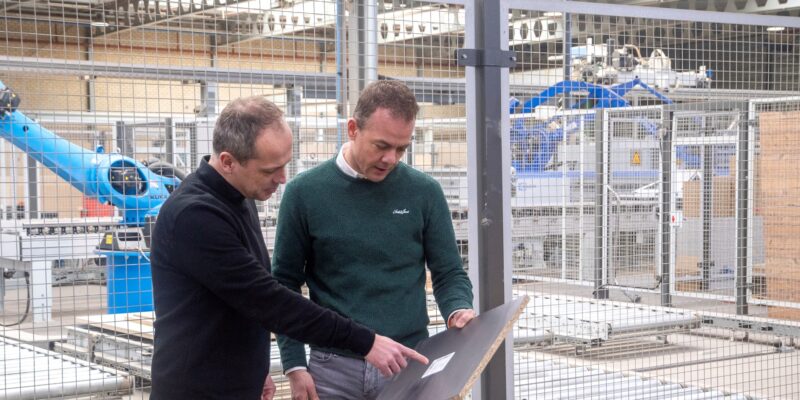
Circularity in healthcare is gaining attention and great progress is already being made. We spoke to Professor Erik van Raaij of Erasmus University Rotterdam. Erik collaborates closely with partners such as the Erasmus Medical Centre and TU Delft to improve sustainability in healthcare. In this article, he shares his vision, insights, practical examples and tips. Photo: Hans Tak.
What is circularity in healthcare?
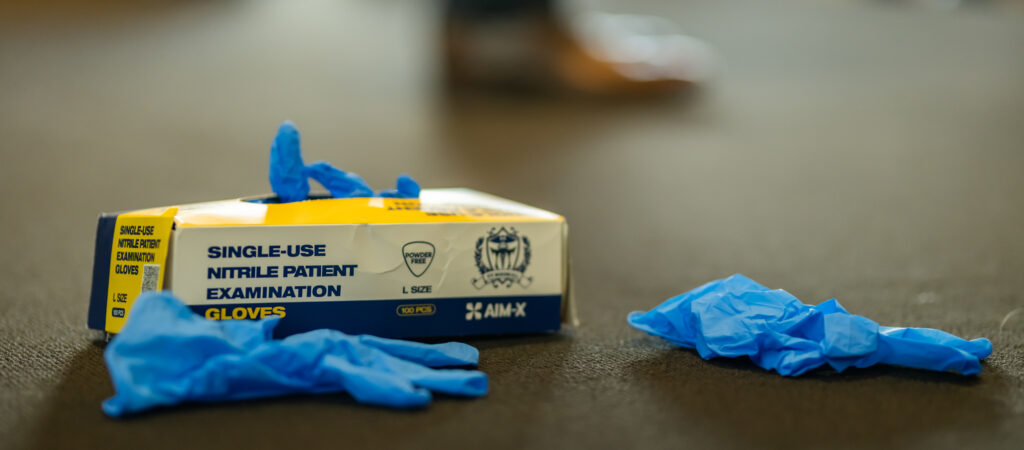
‘Circularity in healthcare means using materials and products as efficiently and responsibly as possible. It means using medical equipment for longer, and reusing, repairing or recycling materials. This helps prevent raw material exhaustion and reduces the amount of waste we produce. The importance of this becomes clear when we look at the statistics: ‘in the Netherlands, healthcare is responsible for 7% of greenhouse gas emissions and consumes 13% of all raw materials’. The intensive use of disposable materials especially contributes to this. Each year, healthcare in the Netherlands alone produces 328 million kilos of waste (Gupta, 2022).’
Why is circularity in healthcare so important?
‘Every new device or product uses primary raw materials again. They are produced, purchased, used and eventually incinerated. This linear approach not only depletes raw materials but also generates huge amounts of waste. In our research, including in the ESCH-R project, we look for ways to keep valuable materials in the system. For example, more reuse and designing products in such a way that they consume fewer materials and last longer. This is where I see a lot of opportunities and possibilities.’
Can you give an example?
‘In the Netherlands, we already see a growing number of initiatives to promote circularity in healthcare. More and more healthcare organisations are taking the lead and taking concrete steps towards a circular economy. For example, they are actively working on the reuse of medical devices, extending the lifespan of equipment and reusing parts.
One example is the ‘Endo Cutter’. This device is used during operations to suture or cut tissue through a small hole in the abdominal wall. It contains valuable materials such as plastic, stainless steel and electronics. Yet this device is normally incinerated after one use. Fortunately, there are improvements. For instance, there is now an organisation that cleans the plastic handle and grinds it into plastic granules to make new plastic products, such as credit cards. This is a step in the right direction, but a lot of value is still lost. There is now also a new variant of the Endo Cutter. It can be split after use so that certain parts can be cleaned and reused. This shows that there is a lot of creativity to make healthcare more sustainable. But we aim to take bigger steps to avoid waste. We are continuing to look for ways to get even more value out of our materials to contribute to a sustainable future in healthcare’.
What makes healthcare different from other sectors?
‘In healthcare, decisions are more often about life and death. Things like ‘sterile’, ‘safe’ and ‘freedom of choice’ are not up for discussion, these are preconditions. You have to take that into account. There is also a strong focus on cost control in healthcare. The healthcare sector works with small margins. There are often staff shortages, so work has to be organised efficiently. Circular solutions should therefore not impose an additional burden on employees. Also, procurement in healthcare is very fragmented in the Netherlands, while there are large suppliers. This makes it difficult to set uniform requirements and buy together. These unique challenges make circularity in healthcare more complex than in many other sectors, but certainly not impossible. We see plenty of opportunities and possibilities.’
Unique challenges make circularity in healthcare more complex than in many other sectors, but certainly not impossible. We see plenty of opportunities and possibilities.
Erik van Raaij
How can we make strides in the healthcare sector within current regulations?
‘Regulations in the healthcare sector often promote the use of single-use disposables because of strict safety standards. Yet we are taking sustainable steps within these frameworks by revising protocols, for example. To take bigger steps, it is necessary that we, as hospitals, collaborate more to create a joint demand for sustainable solutions. In countries such as Norway and the UK, central purchasing bodies already impose sustainability requirements on suppliers. We want to follow this example here in the Netherlands too by increasing collaboration and unity in our demand for sustainable products. In addition, we actively participate in policy-making and lobby for regulations that promote sustainability. This means collaborating with regulators and policymakers. We want to look beyond occasional initiatives. We want to make changes in the way we design, use and dispose of products to make healthcare future-proof and circular.’
What opportunities do you see to make healthcare more circular?
‘We see a lot of low-hanging fruit. These initiatives are relatively simple. Great examples are using infusion lines for longer and extending the lifespan of medical equipment.’
‘To make healthcare more sustainable and more circular, our research includes looking at hotspots: which equipment and which consumables have a high environmental impact and what do we do with them? There are several places where we can intervene to make healthcare more sustainable. For instance, we can opt for more sustainable solutions when purchasing products and we can encourage suppliers to offer other business models. We also look at protocols and daily work processes to see how we can reduce material use and waste. Finally, we can look at care paths, the steps a patient goes through, to make them more efficient and sustainable. By intervening in these ways, we are making care more sustainable step by step.’
What advice do you have for buyers?
‘Don’t do it alone. Collaboration is crucial for sustainability, no matter what sector you work in. Buyers can collaborate on several levels. First, there is a need for horizontal collaboration among buyers. Instead of asking industry questions separately, we can join forces to formulate common questions that will help us all become more sustainable. In addition, collaboration with suppliers is essential. Through co-creation, we can work with suppliers to develop new, sustainable products. It is also valuable to learn from other countries and sectors. ‘Copy what others are doing and don’t fall into the trap where you only use your own ideas.’
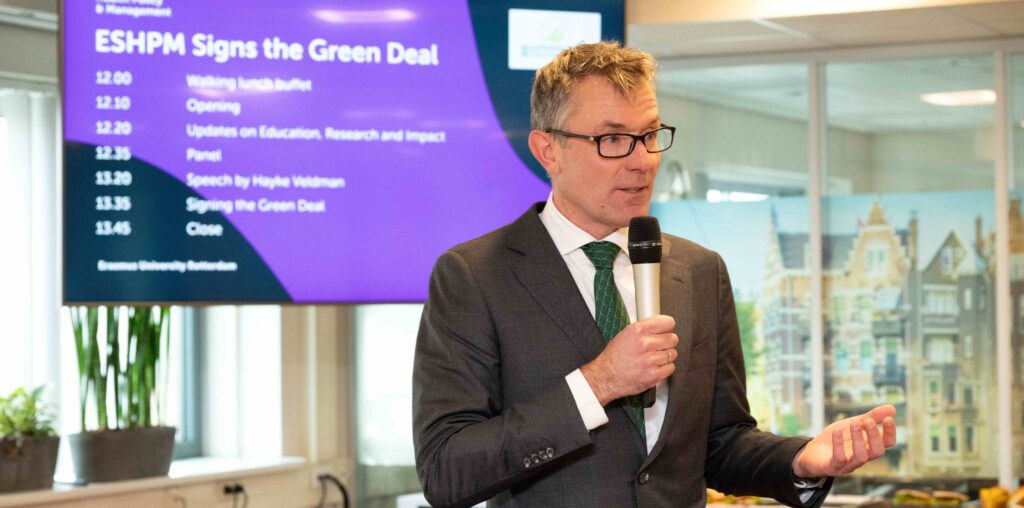
Copy what others do and don’t fall into the trap where you only use your own ideas.
Erik van Raaij
Looking further ahead, how do you see the future?
‘In ten years’ time, I would like to see Dutch hospitals acting together and refusing single-use disposables as much as possible. This requires strong collaboration. It is also important to learn from other countries and sectors and copy best practices. In this respect, it is important to pay more attention to education and training on sustainability and circularity so that healthcare professionals are better able to make sustainable choices. Ultimately, we want to find a balance between quality of care, sustainability, safety, work pressure and costs, and integrate this into decision-making within the healthcare sector. With the right collaboration and conscious choices, the healthcare sector can become more sustainable without compromising on quality or safety. Circularity in healthcare is not just a wish, but a necessary step towards future-proof and responsible healthcare.’