Circular procurement for Defence: 30,000 refurbished thin clients for working from home
Defence is one of the largest procurement organisations in the Dutch government. Annually, more than 22 billion euros are spent across 3,580 procurement processes. That provides economies of scale.
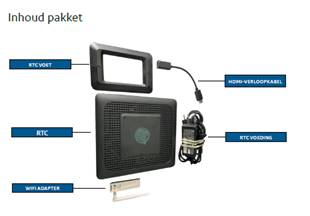
An example of this is the thin client: a simple device without its own processing power that connects to the remote working environment via Wi-Fi or a home internet connection. What began as a fast, cheap solution for the sudden demand for working from home during COVID grew into one of the largest refurbished initiatives within the Dutch government: more than 30,000 devices and a saving of around 25 million euros.
This time we speak with Anton Meeuwsen. He is assortment manager at COMMIT, the Defence division focused on the procurement of equipment and IT.
What was the reason to get started with circular procurement?
It actually started during the COVID period. The sudden demand for working from home exceeded the existing laptop stock at that time. The laptops normally deployed for working from home were high-end and expensive devices. Moreover, they could not be delivered quickly enough on a large scale.
In the beginning, sustainability was not a conscious starting point. The starting point was simply a cheap solution for working from home that could be delivered quickly. That led to a search, where we ultimately ended up with a thin client: a simple device that connects to the working environment via its own Wi-Fi or internet. This enabled our colleagues to work from home without the device itself needing to be powerful.
During the process, it became clear that this was also a sustainable approach. Defence has 70,000 to 80,000 work-from-home workstations, up to 80% of which are equipped with thin clients. These are deployed and eventually reused after being refurbished. Furthermore, the newer generation of thin clients leads to fewer malfunctions. Circularity was thus naturally integrated without having been explicitly formulated as a goal.
The result is one of the largest refurbished initiatives within the Dutch government: more than 30,000 devices. That delivered not only a significant sustainability gain, but also a major cost saving of over 850 euros per device—a total of around 25 million euros. The project was co-funded by the European Union through NextGenerationEU.
How do you handle something like this on a large scale?
The approach started small. First, 100 devices were deployed within assortment management and procurement so that colleagues could test and provide feedback. In parallel, an intranet page was set up with frequently asked questions and explanations about refurbished thin clients. After that, the ordering and delivery process was established for the rest of the organisation. Employees can now order the devices directly and receive them within a week.
That the approach was also circular became clear along the way. The next obvious step is already presenting itself: returning old thin clients that are sitting on shelves in the organisation back to the depot, refurbishing them, and deploying them again for working from home. That makes the organisation less dependent on the market and saves on two fronts: no disposal costs for old devices, and no purchase costs for new ones.
What were your biggest challenges?
Our thin client supplier bought from various intermediary suppliers, which meant the hardware quality was not always consistent. Sometimes a device did not function properly, booted up differently, or presented a different interface. That triggered many questions from colleagues and therefore extra actions for us to resolve them.
Logistically, it also turned out to be more complex than expected. A supplier that delivers seamlessly in the Benelux does not necessarily manage well in the Caribbean, America, or Japan. Ultimately, the Military Postal Organisation was brought in for international shipping.
What advice do you have for buyers?
Start, but keep it small. Otherwise, it becomes impossible for anyone to afford or acquire. Look closely at the purpose for which the device is being used and what is the minimum requirement for that. People’s standard reaction is: more memory, more speed. While that is very often not necessary.
In addition, ensure you have a good team around you. You do not do these kinds of projects alone. And do not underestimate the communication side: ensure sufficient exchange of information, both internally and for the employees receiving the devices.
‘Look closely at the purpose for which the device is being used and what is the minimum requirement for that.’
Anton Meeuwsen
Looking further ahead, how do you see the future?
The ambition is to reduce dependence on one specific model: being able to choose more models and technologies, and perhaps even a phone in a cradle that provides direct access to the network via Wi-Fi. At the same time, pressure is increasing. New devices are becoming more expensive due to the current geopolitical situation, and that only makes the business case for refurbished even stronger, as long as the price does not rise along with it.
“I would like to encourage others to do the same. I see so many people walking around with laptops that are far too good for the work they are being used for. Devices are structurally purchased that are much more powerful than the work requires. The most sustainable purchase is one you do not make, or one where the device already has a life behind it.”
Buying nothing, differently, or less as a circular choice
As Anton explains, the most sustainable purchase is the purchase you do not make. That is the core principle of the research project Niet, Anders, Minder Inkopen (NAMI – Buying Nothing, Differently, Less), in which the Ministry of Defence, among others, is exploring as a practical partner how procurement professionals can apply these circular strategies.