From food waste to circularity: ‘Together we can make a real impact’

Food supply plays a major role in how we organise our society, but many organisations are struggling to make their food systems more sustainable and circular. We spoke to Debbie Rooms, Head of Sustainability at Compass Group Netherlands. Debbie shares her insights on the steps towards a circular catering sector in the Netherlands. She talks about the role of suppliers and buyers, the strategies she applies and the opportunities she sees within the sector.
Can you tell us something about Compass Group and your role in it?
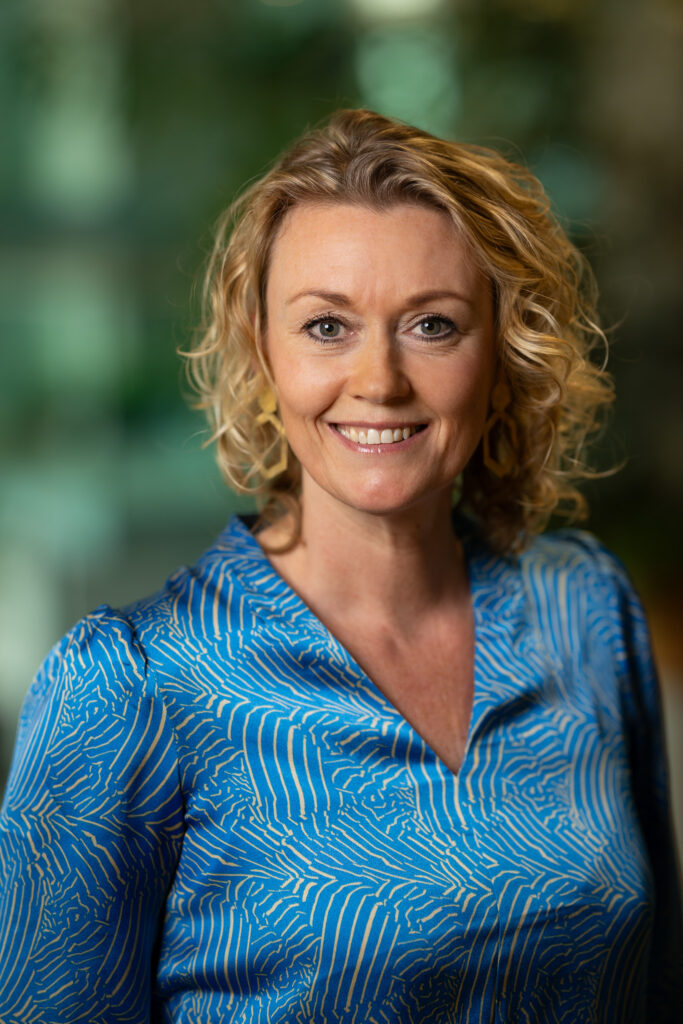
‘Food affects everyone; everyone has an opinion about it and makes decisions regarding it every day. Compass Group is one of the largest caterers in the world. Precisely because we provide so many meals, we are capable of making a huge impact through a responsible and sustainable strategy. In my role, I translate our sustainability goals into a practical approach. Previously, there were many ambitious plans and lots of separate initiatives, but there was no concrete step-by-step plan. That’s why I developed a roadmap, with clear actions to achieve our goals. I develop tools, motivate teams and collaborate with various parties to make more conscious choices and reduce waste streams.’
How do you implement circularity?
‘We provide 30 million meals a year in the Netherlands, which gives us the opportunity to make a big impact. Our goal is to reduce CO2 emissions by 50% by 2030, which is no easy task in our sector. We are doing this based on three pillars: Environment, People & Society and Vitality. This means that we are actively committed to lower CO₂ emissions, a higher proportion of plant-based food and reducing food waste. Circularity plays a key role in this. This is not just an abstract concept, but translates into concrete actions and measurable goals, using the R ladder as a tool.’
Can you give some examples?
‘We use the Winnow food waste monitor to record various food waste streams using smart weighing technology. We collect and compile this data in clear online reports, which we use to identify opportunities to reduce waste. For example, we have managed to reduce residual waste in the municipality of Utrecht to less than 2%. This is because we carefully separate and reuse our residual waste streams. One example is our collaboration with Clique. They collect waste such as coffee grounds, bread and orange peel using bicycle couriers. These residual products are then processed into new products such as oyster mushrooms, beer and soap. We use the products made from these oyster mushrooms in our restaurants. This closes the loop.’
Another good example is our deposit system. This is a system for reusable food containers as a sustainable alternative to disposable packaging. It is a loan system via an app, whereby costs are only charged if the container is not returned after 14 days. We have successfully tested the system with 200 participants, with an impressive return rate of 99.6% and a saving of no less than 522.5 liters of waste.
What challenges do you still see?
‘Although our own residual waste stream remains limited, preventing waste is a major challenge. For example, we try to avoid single-use packaging as much as possible by offering cheese, spreads and salads in trays instead of individual packaging. We are also replacing plastic milk cartons with jugs. An important challenge here is food safety: estimating how much product is needed and minimising waste without compromising food safety. This approach is not only relevant for large organisations; small businesses and institutions can also get started. By making smart choices in packaging and waste management, they can actively contribute to their sustainability and circularity goals.

Where do you see the greatest opportunities?
‘I see the greatest opportunities in improved collaboration and communications. It is often difficult to directly influence what people put on their plates, but it is possible to stimulate awareness. One example is catering for meetings: orders are often placed without knowing how many participants will actually be present. Better communication reduces waste. Collaboration with clients plays an essential role in this.’
It is often difficult to directly influence what people put on their plates, but it is possible to stimulate awareness.
Debbie Rooms
Why is collaboration so important?
‘Many organisations have high sustainability ambitions, but these are often difficult to achieve without good collaboration. Sustainability and circularity are not only the responsibility of the supplier; the client also has an important role to play. A concrete example: reducing the lunch offering after 12:30 to reduce food waste. If guests are not aware of this, it can sometimes lead to irritation. By communicating this with the client, we create more understanding. It also helps to talk to people who order meeting lunches, etc., and make sure that not too much is ordered.’
Do you have any tips for purchasers?
More and more tenders require circular thinking, but knowledge about this is still lagging behind. Sustainability and circularity are collaborative processes: the more often purchasers engage in dialogue with suppliers, the more concrete circular ambitions can be realised. At the same time, waste streams are often still tendered separately, while the link between catering and waste management is very important.
‘In addition, we sometimes see ambitious targets in tenders that are difficult to achieve in practice. It is more effective for purchasers to set realistic targets in consultation with suppliers and to determine together how these can be achieved. Circularity requires a broader perspective and collaboration between all parties within a building or organisation.’
Circularity requires a broader perspective and collaboration between all parties within a building or organisation.
Debbie Rooms
How do you see the future in five years?
‘In five years, we want to further reduce our waste streams and food waste by fifty percent. This is achievable if we also involve our employees and guests in this change. Awareness and collaboration play a crucial role in this. We can only achieve sustainability and circularity together.’