Not, differently and less procurement (NAMI): The most sustainable purchase is the one you don’t make
Environmental pressure in the Netherlands has risen by 58 per cent over the past thirty years due to growing consumption. For buyers, this means: the greatest impact is not made at the end of a product’s life cycle, but at the start of the purchasing process when asking whether a purchase is actually necessary.
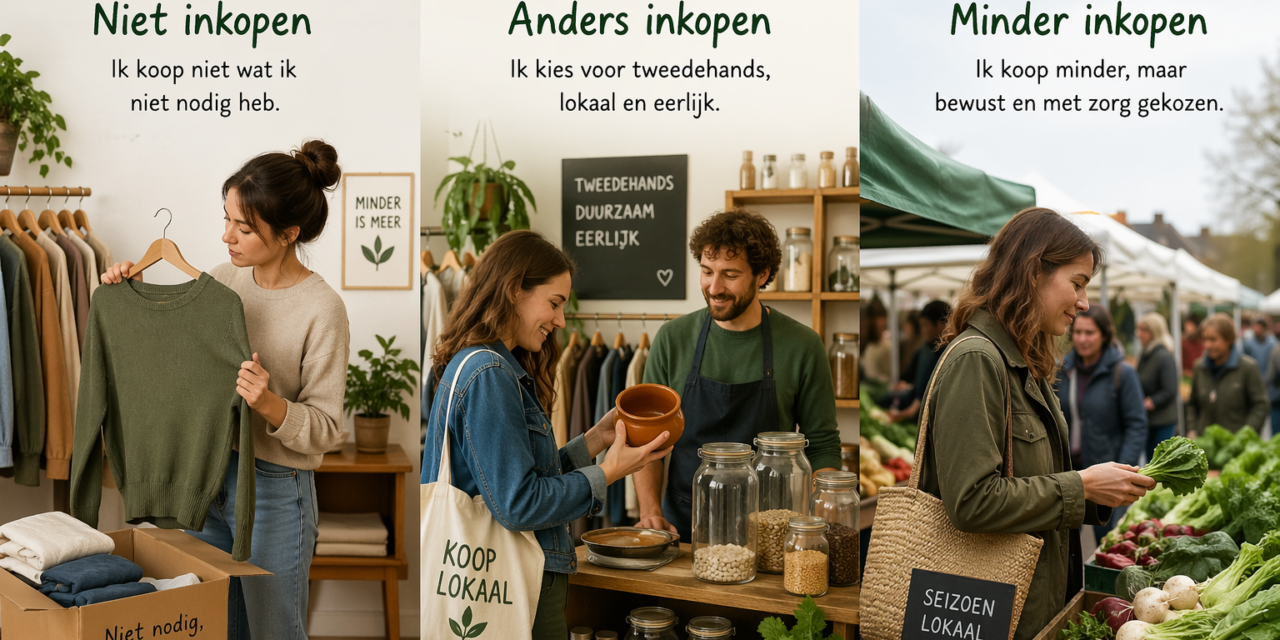
The transition to a circular economy therefore requires not only better products, but also a change in behaviour. Don’t buy, buy differently, or buy less. We spoke to Maaike Snijder, a researcher at the Public Procurement Research Group at The Hague University of Applied Sciences. Together with the ‘Less is More’ working group, she wrote a white paper for procurement professionals in the facilities sector.
What prompted you to write the white paper?
‘I conduct research within NAMI, which stands for ‘Niet Anders Minder Inkopen’ (No Different, Less Procurement). Together with The Hague University of Applied Sciences, Rotterdam University of Applied Sciences and Erasmus University, we are committed to bridging the gap between circular procurement policy and what actually happens in practice. We are working on this with our partners: the Ministry of the Interior, the Ministry of Foreign Affairs, the Ministry of Defence, Rijkswaterstaat, PIANOo and Nevi.
My part of the research focuses on the facilities sector. To this end, I worked with the ‘Less is More’ working group, one of the working groups within the Rijkswaterstaat FM Circular community, a community of around 60 organisations that aim to contribute to a more sustainable world through facility management. What stood out was that the R-ladder is a familiar concept in the world of circular procurement, but that it is essentially intended for manufacturers. The procurers in my working group did not really identify with it. They wanted to know what the top three strategies in particular meant for them in concrete terms. This aligned with the aim of our research and prompted us to organise three workshops: on what refuse, rethink and reduce mean for procurers, what obstacles you encounter, and what you need to really get started. The white paper emerged from that.’
What does ‘refuse, rethink and reduce’ mean in practice?
‘Refuse, rethink and reduce are the top strategies on the R-ladder and therefore have the greatest impact on resource use. Yet, in practice, they are the least applied. We have translated them into procurement practice to offer a practical perspective for procurement professionals.
- Refuse starts with assessing the need: is this purchase really necessary, or can the need be met in another way, perhaps with something already available within the organisation?
- Rethink concerns the tendering process: is it really necessary in this form, or could it be done differently? Draw up functional specifications and make room for other types of materials and alternative business models.
- Reduce focuses on the procurement of products and the question of whether this quantity is truly necessary. This requires insight into usage: buy less, or choose products that require fewer raw materials.

We have seen some excellent examples in the working group. A cleaning company discovered that gloves were not needed at all in 95 percent of cases. By adapting work processes, usage fell by 50 percent. A range of 55 office supplies was reduced to 21, without any complaints from staff. And budget for flowers was redirected towards sustainable plants. Small changes with a big impact.’
“Refuse, rethink and reduce are the highest strategies on the R-ladder and therefore have the greatest impact on raw material use.”
Maaike Snijder
What challenges do buyers face?
‘If you want to get started with this, you’ll soon encounter obstacles at various levels:
- At the system level, for example, there’s the cash commitment system: to ensure your budget isn’t cut, people tend to spend whatever’s left within the budget before the end of the year. A nasty incentive to buy more than is necessary.
- At the organisational level, there is often a lack of data on what is already in stock, and a lack of time and scope to experiment.
- And at the individual level, emotional resistance plays a major role. Change feels like something being taken away, even when that is not the case at all.
One example that stuck with me: an organisation had already increased the proportion of vegetarian catering options to 70 per cent, without anyone saying a word. It was only when they communicated this widely that the complaints started. As soon as it became explicit, people felt that something was being taken away from them, even though they’d been eating it for months. That says a lot about how perception makes all the difference.’
Do you have any tips for procurement professionals who want to get started with this?
‘Just give it a go, that’s my main tip. But there are a few things that make it easier. Ensure there is a policy in place. If your organisation has set a goal to procure differently or in smaller quantities, you can refer to that. You won’t be on your own. And if that policy isn’t in place yet? Make sure it gets implemented.
Also ensure you have baseline data. Once you’ve mapped out the baseline situation, you can demonstrate what you’ve achieved and convince management. Although not procuring is a challenge in itself: how do you prove that you haven’t procured something?
Create room for experimentation. One of the participants introduced the ‘100-day no-complaining method’: you agree to try it for 100 days, note down what you encounter, but only evaluate it afterwards based on facts. That helps enormously in letting go of old habits.
And seek out allies. Form a coalition and analyse together where your obstacles lie – technological, legal, economic or socio-cultural – and at what level. Then choose one obstacle and focus on what lies within your sphere of influence.
Because as an individual organisation, you can only reach as far as the ceiling of your own organisation. If you go beyond that, you’ll encounter systems that need to change. And you do that together. That’s precisely why initiatives such as the FM Circular community are valuable: by sharing knowledge and experiences, you work towards the point where circular FM is no longer the exception but the standard.’
The white paper
The white paper ‘Not, differently and less procurement: how do you do that in the facilities sector?’ is a joint product of the ‘Less is More’ working group and the NAMI research team.
Download the whitepaper here: Community FM Circular | Waste Circular